
AI Agent Guardrails
A practitioner's handbook for containing autonomous coding agents — tool-call gates, OS sandboxing on Linux/macOS/Windows, MCP hardening, red-teaming — with a dated, citation-backed survey of twenty real guardrails products and a runnable lab in every chapter, against your own machine.
$5 one-time · EPUB + PDF · instant download
Get the book
Inside the book
Three of the book's ten original diagrams — real figures from the manuscript, not marketing illustrations.
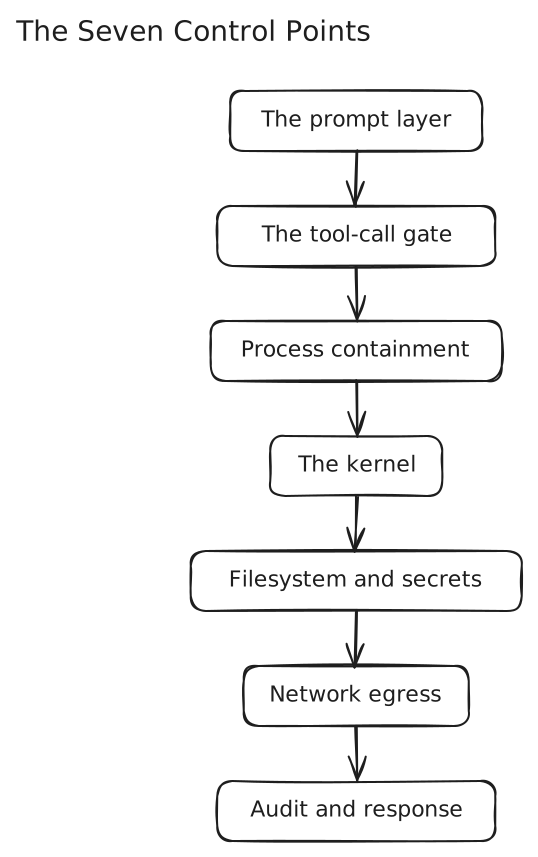
The mental model the rest of the book builds on: seven places a coding agent's actions can be stopped, each covered in its own chapter.
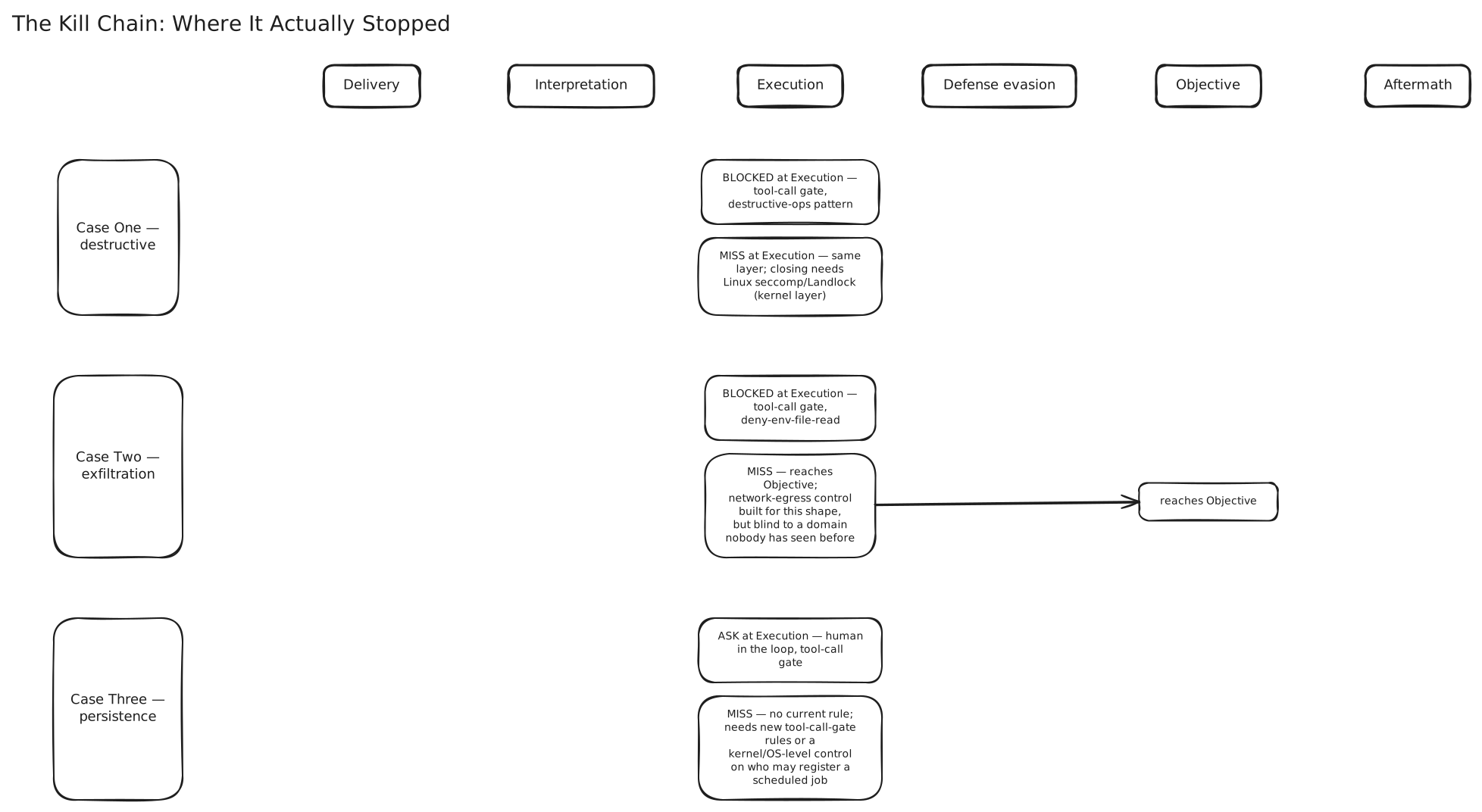
Three worked cases tracing where a real guardrail actually intervenes in an attack — blocked, missed, or asked.
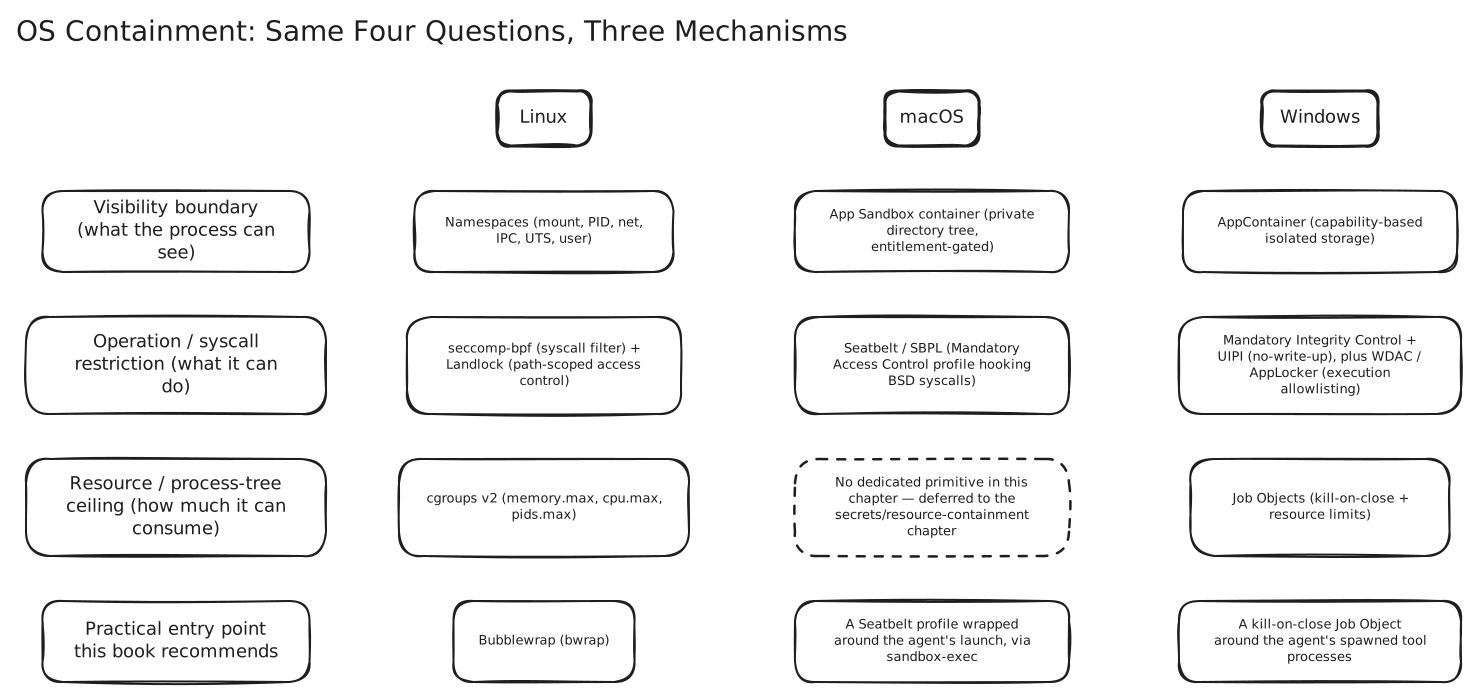
Every containment technique in the book covered for Linux, macOS, and Windows — never just one platform.
What you'll build
AI Agent Guardrails is a practitioner's handbook for containing autonomous coding agents on machines that matter — a laptop with SSH keys and cloud credentials, a CI runner with a deploy key, a shared workstation with a company's source tree checked out. A coding agent that reads a file, runs a shell command, and fetches a URL is not a bigger autocomplete: it is a program that writes and executes other programs, steered by text that can arrive from anywhere — a pull request, a README, a hostile MCP tool description. Across 24 chapters, author Charles Chong builds a reference architecture of containment layers — tool-call interception, OS and kernel sandboxing on Linux, macOS, and Windows, network egress control, evaluation and red-teaming — and names twenty real guardrails products against a five-layer taxonomy, stating plainly where each is stronger than his own SigmaShake Governance (SSG). Every technical claim carries a citation and a retrieval date.
Get the book
What's inside
The Problem
- The Agent Is Not a Chatbot
- The Agent Threat Landscape
- Anatomy of an Incident
- A Reference Architecture
Interception
- Hooks: Where to Stand
- Policy as Code
- Allowlisting and Denylisting
- Hardening MCP
- Prompt-Layer Defenses and Their Limits
Containment
- Sandboxing on Linux
- Sandboxing on macOS
- Sandboxing on Windows
- Kernel Hardening for Agent Hosts
- Secrets, Filesystem, and Resource Containment
Perimeter
- Network Egress Control
- Antivirus, EDR, and the Agent Process
- Threat Intelligence for Agent Runtimes
Measurement and Response
- Evaluating Guardrails
- SHAKEDOWN: Building a Defender Benchmark
- Red-Teaming Your Agent
- AI-DR: Detection and Response
Practice
- The Guardrails Product Landscape
- Rolling Out Guardrails at Scale
- Building Your Own Guardrail